
Fears of Renewed Xenophobic Violence Grow in Johannesburg
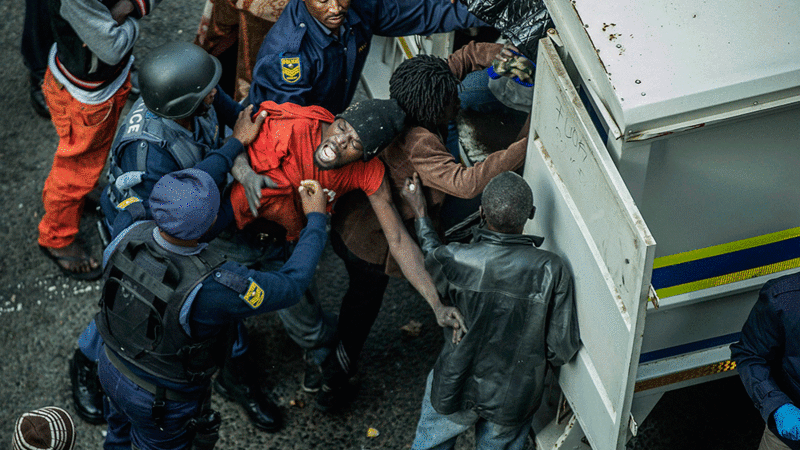
Johannesburg may be edging closer to another wave of xenophobic violence as heightened law-enforcement operations and community activism aimed at undocumented migrants begin to shape public perception and street-level behavior.
Recent police activities under Operation Shanela, a nationwide crime-fighting initiative, have been heavily publicized, with a strong emphasis on arrests and deportations of undocumented foreign nationals. While authorities maintain that the operation is intended to combat crime and restore law and order, its messaging has raised concern among civil society groups and migration experts.
At the same time, Operation Dudula, a community-led movement that openly targets foreign nationals accused of operating illegally in South Africa, has intensified its actions in parts of Gauteng. Dudula’s marches, shop closures, and public naming of foreign-owned businesses have further inflamed already fragile social tensions in economically stressed communities.
Analysts warn that the convergence of these two forces — state-driven enforcement and citizen-driven vigilantism — creates a dangerous environment. Many residents, particularly those unfamiliar with South Africa’s complex immigration and asylum systems, may struggle to distinguish between undocumented migrants, legal asylum seekers, and fully documented foreign nationals.
“The risk is that ordinary citizens begin to act as immigration officers,” said one migration analyst. “When police messaging and community activism blur together, it becomes easy for frustration to turn into mob justice.”
Johannesburg has a painful history of xenophobic violence, with previous outbreaks resulting in deaths, displacement, and widespread destruction of property. In many cases, victims were attacked solely on the basis of language, appearance, or nationality — regardless of their legal status.
Human rights organizations have cautioned that the public framing of immigration enforcement must be handled carefully. They argue that while the state has a right to enforce its laws, aggressive public campaigns can unintentionally legitimize harassment, profiling, and violence against anyone perceived to be foreign.
Police officials have repeatedly stressed that **Operation Shanela is not anti-immigrant**, but crime-focused. However, critics argue that repeated public displays of arrests involving foreign nationals risk reinforcing the narrative that immigrants are the primary drivers of crime — a claim not consistently supported by evidence.
Community leaders are now calling for clearer communication from government, stronger education around immigration law, and a firm stance against vigilantism. Without these measures, they warn, Johannesburg’s volatile mix of unemployment, poverty, and social frustration could once again erupt into violence.
As tensions simmer, the coming weeks may prove critical in determining whether South Africa can balance law enforcement with social cohesion — or whether history is at risk of repeating itself.